
 By
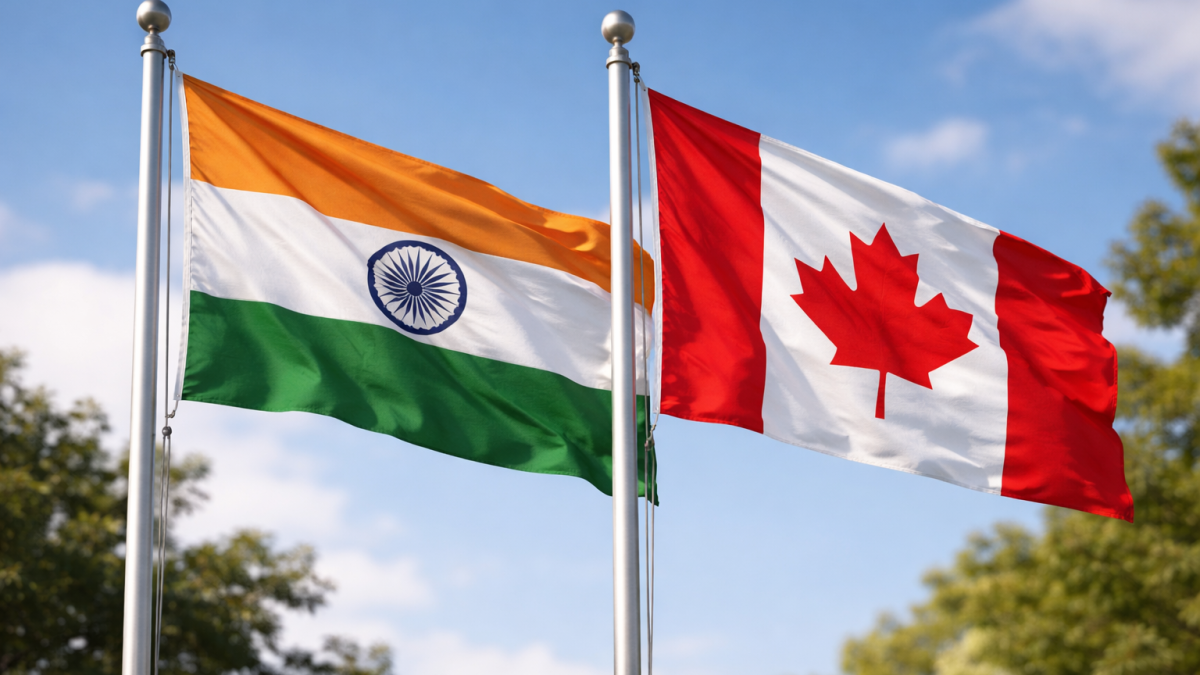
By India and Canada on Monday took a decisive step toward resetting their troubled relationship, signing a landmark $2.6 billion uranium supply agreement and agreeing to fast-track negotiations on a long-pending trade pact, as Prime Minister Narendra Modi hosted his Canadian counterpart Mark Carney in New Delhi.
The long-term uranium supply agreement valued at $2.6 billion, is aimed at supporting India’s expanding nuclear energy programme.
Carney also announced that the two sides had agreed to accelerate negotiations on a Comprehensive Economic Partnership Agreement, or CEPA, with the aim of doubling bilateral trade to C$70 billion ($51 billion) by the end of the decade.
“This ambitious agreement will reduce barriers, increase certainty and unlock opportunity for exporters, investors and workers in both our countries,” Carney said.
The agreements, announced after bilateral talks at Hyderabad House, signal a sharp shift in tone following years of diplomatic friction and reflect Ottawa’s push to diversify trade amid growing uncertainty in its ties with the United States.
Energy deal anchors reset in ties
Modi said the uranium deal would strengthen energy security and open the door to deeper cooperation in advanced nuclear technologies.
“We have reached a landmark deal for long-term uranium supply. We will also work together on small modular reactors and advanced reactors,” Modi said in a joint statement after the talks.
The agreement aligns with India’s efforts to diversify its energy mix while expanding low-carbon power generation.
For Canada, one of the world’s largest uranium producers, the deal offers a foothold in one of the fastest-growing major economies.
Trade negotiations revived after long pause
Trade negotiations between India and Canada began in 2010 but stalled after a severe diplomatic rupture in 2023 with India accusing Canada of sheltering extremists linked to the Khalistan separatist movement, which Delhi considers a terrorist threat.
Ottawa had accused the Indian government of involvement in the murder of Hardeep Singh Nijjar, a Canadian citizen and Sikh activist, on Canadian soil, an allegation New Delhi strongly denied, leading to the suspension of talks, expulsions of diplomats and visa curbs.
Canada is home to nearly one million Sikhs, the largest such community outside India.
“The Canada-India partnership has historically underperformed, and has been in serious trouble over the last decade,” C Raja Mohan, a visiting professor at the Institute of South Asian Studies in Singapore, told the Financial Times.
He said Carney’s visit “completes the rebuilding of ties with the colonial cousins”.
Notably, Carney avoided visiting Punjab during his trip, a departure from the itineraries of some of his predecessors, underlining the cautious tone of the reset.
A pragmatic shift in Ottawa
Carney’s visit reflects a more pragmatic foreign policy approach in Ottawa as Canada seeks to counter the impact of tariffs imposed by US President Donald Trump.
Canada has set a target of doubling non-US trade to C$300 billion over a decade.
“In the last decade, India has become the world’s fastest-growing major economy,” Carney said.
“The most ambitious projects in clean energy, the digital economy and the next generation of AI talent are all here. Canada shares this ambition.”
The Canadian prime minister arrived in India after a stop in Mumbai and a regional tour that includes Australia and Japan.
Earlier this year, he also visited China, where both sides agreed to ease trade barriers on key goods.
Trade and people-to-people links
Bilateral trade in goods stood at nearly C$9 billion in 2024, with Canada exporting food products and mineral oils, while India shipped pharmaceuticals, machinery and equipment.
Services trade is even larger, with Canada’s exports to India estimated at around C$13 billion last year, driven largely by Indian students travelling to Canadian universities.
Both sides also signed several memorandums of understanding covering critical minerals, renewable energy cooperation and cultural exchange, highlighting the breadth of the renewed engagement.
“This visit marks the end of a challenging period and, more importantly, the beginning of a new, more ambitious partnership between two confident and complementary nations,” Carney said.
Strategic calculus for New Delhi
For Modi, analysts say the reset offers strategic and political dividends.
Domestically, it reinforces his image as a leader who stood firm during the diplomatic crisis.
Internationally, it helps India diversify energy supplies at a time when Washington has pressed Delhi to reduce purchases of Russian oil.
Any partner that can help India secure long-term access to uranium, oil, gas and coal is valuable, particularly as the country’s energy demand continues to surge.
While underlying differences remain, both governments appear keen to move forward, driven by shared economic interests and a changing global trade landscape.
The post Why the India-Canada reset matters as uranium deal revives stalled ties appeared first on Invezz
